

Add preferred source
China A-shares rallied on heavy volume on the 18th, with semiconductor chips and <a href="https://industrymovement.com/baumont-real-estate-acquires-citta-santangelo-outlet-village/" title="BauMont <a href="https://industrymovement.com/real-estate-trading-exceeds-qar-387-million-in-one-week/" title="Real Estate Trading Exceeds QAR 387 Million in One Week”>Real Estate acquires Città Sant'Angelo Outlet Village”>real estate sectors leading the charge. The Shanghai Composite Index rose 0.94% to close at 3,911.87 points, reclaiming the 3,900-point level; the Shenzhen Component Index gained 1.72%, the ChiNext Index advanced 2.25%, and the STAR 50 Index climbed 2.88% to close at 1,652.63 points, its highest since August 31. Combined turnover across the Shanghai and Shenzhen exchanges reached CNY 2.0771 trillion (approximately $310.2 billion), up about 14% from the previous session, with more than 4,200 stocks closing higher across the Shanghai, Shenzhen, and Beijing exchanges. The STAR 50 surged 6.39% for the week, its strongest weekly performance in over a month, recovering most of the losses from the prior two weeks. The semiconductor supply chain rallied across the board, with Chinese chip packaging firm Tianshui Huatian Technology and Chengfang Co. among multiple stocks hitting their daily limit-up. Sub-new stocks saw frenzied trading, with C Shengu briefly surging nearly 300% intraday. The real estate sector rallied in the afternoon, with Seazen Holdings and China Vanke locking in limit-up gains. Automobile manufacturing, coal, and banking stocks bucked the trend and moved lower.
Key Elements
China A-shares staged a broad-based rally on the 18th, powered by the twin engines of semiconductor chips and real estate, with all four major indices closing in positive territory. The Shanghai Composite Index reclaimed the psychologically important 3,900-point level, while the STAR 50 Index posted a weekly gain of more than 6%—its strongest single-week performance in over a month.
The Shanghai Composite Index finished up 36.27 points, or 0.94%, at 3,911.87 points, with the daily candlestick turning positive. The Shenzhen Component Index rose 230.97 points, or 1.72%, to close at 13,640.87 points. The ChiNext Index surged 74.37 points, or 2.25%, to settle at 3,372.68 points. The standout performer was the STAR 50 Index, which climbed 46.34 points, or 2.88%, to close at 1,652.63 points—its highest closing level since August 31.
From a weekly perspective, the Shanghai Composite Index gained 0.61% for the week, the Shenzhen Component Index rose 1.26%, and the ChiNext Index advanced 1.52%, with all three major indices posting positive weekly candles. The STAR 50’s weekly performance was particularly notable, surging 6.39% for the week—the strongest weekly gain since the 6.61% jump during the week of August 7—recovering most of the 6.62% cumulative decline from the prior two weeks.
Trading Volume Expands Significantly as Capital Favors Growth Stocks
Market sentiment clearly rebounded, with trading volume expanding in tandem. The Shanghai market posted single-day turnover of CNY 994.2 billion (approximately $148.5 billion), while the Shenzhen market recorded CNY 1.0829 trillion (approximately $161.7 billion). Combined turnover across the two exchanges reached CNY 2.0771 trillion (approximately $310.2 billion), up about 14% from the previous session. Including the Beijing Stock Exchange, more than 4,200 stocks closed higher across the three exchanges, with the advance-decline ratio showing the bulls holding a decisive advantage.
Capital flow data indicates that growth-oriented names continued to attract strong buying interest. The STAR 50 and ChiNext indices significantly outperformed the Shanghai Composite, with heavyweight technology stocks providing the most substantial lift to the indices. Institutional analysts noted that market risk appetite has rebounded, with capital rotating out of defensive sectors and into more aggressive hard-tech plays.
Semiconductors Rally Across the Board as Sub-New Stocks See Frenzied Trading
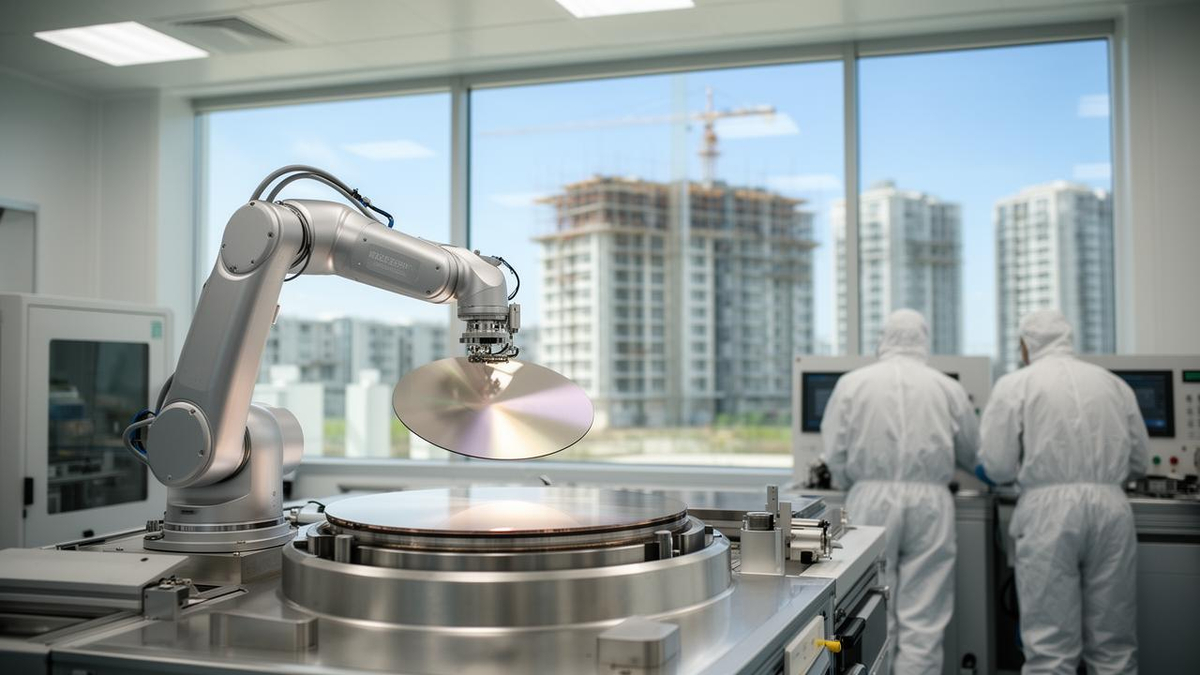
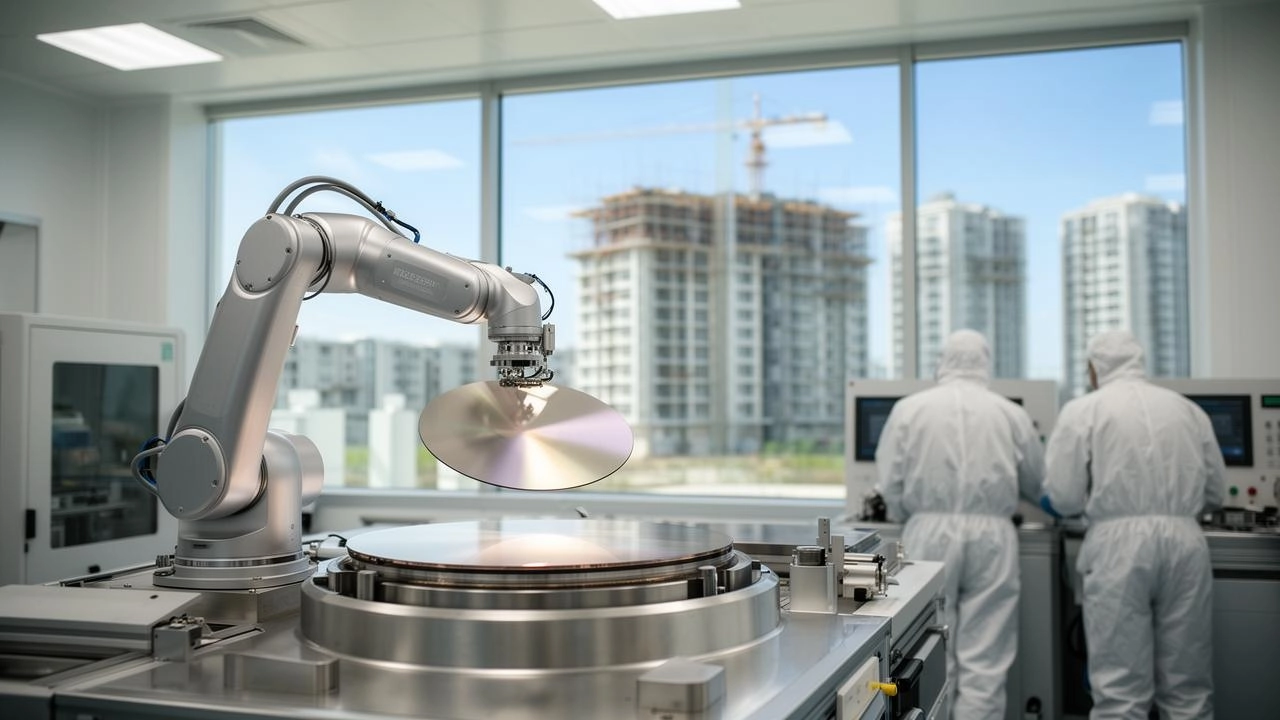
The semiconductor supply chain emerged as the market’s strongest theme, with GPU, memory chip, AI chip, lithography equipment, and advanced packaging sectors leading the gains. Chinese chip packaging and testing firm Tianshui Huatian Technology, along with Chengfang Co., Tolens, and Botong Integration, were among multiple stocks that hit their daily limit-up. Puya Semiconductor, Demingli, Xianong Xinchuang, and Junzheng Co. also rallied in sympathy, fueling bullish sentiment across the STAR Market and ChiNext boards.
Sub-new stocks saw even more frenzied trading activity, with C Shengu briefly surging nearly 300% intraday and C Xinnuowei spiking more than 90% at one point, becoming another focal point of the session. Consumer stocks were also active, with Septwolves, Huafang Co., Guofang Group, and Shanghai Join Buy hitting their daily limit-up.
The real estate sector continued to rally in the afternoon, with Seazen Holdings, China Vanke, Greenland Holdings, and World Union locking in limit-up gains. Market to expectations of supportive policy measures, with capital aggressively positioning in undervalued names
In contrast, automobile manufacturing, coal mining and processing, banking, and soybean-related concept stocks bucked the trend and declined, with Zotye Auto, Jiangling Motors, Dayou Energy, and Minsheng Bank among the laggards.
Morning Session Recap
Looking back at the morning session, the three major A-share indices opened collectively higher before briefly diverging, with the Shanghai Composite Index grinding upward while the Shenzhen Component Index and ChiNext Index consolidated near the flatline. Gains accelerated rapidly before midday, driven by strength in the broader financial sector. By the midday break, the Shanghai Composite Index was up 1.04% at 3,916.07 points; the Shenzhen Component Index had risen 1.52% to 13,613.48 points; and the ChiNext Index had advanced 2.11% to 3,368.03 points. The indices maintained their elevated range in the afternoon, ultimately closing near the highs of the day.
From a sector rotation perspective, this rebound exhibited a pattern of “technology leading, real estate assisting.” The semiconductor sector benefited from the long-term logic of domestic substitution, coupled with sustained growth in AI application demand, making it the top choice for capital inflows. The real estate sector, meanwhile, attracted bargain-hunting capital due to low valuations and expectations of policy tailwinds. The two main themes formed a healthy rotation, steadily propelling the indices higher.
Market participants noted that A-share trading volume has now recovered to above the CNY 2 trillion (approximately $298.7 billion) level, indicating increased willingness among off-market capital to enter the market. If volume can be sustained at this level, the indices could challenge their previous highs. However, the weakening of previously strong sectors such as automobiles and coal also reflects the rapid rotation of capital across different segments, and investors should be mindful of the risks of chasing extended names.
Once added, BigGo Finance appears first in Google Search Top Stories, so you get the broadest, most up-to-the-minute, and most comprehensive global financial news first.
