

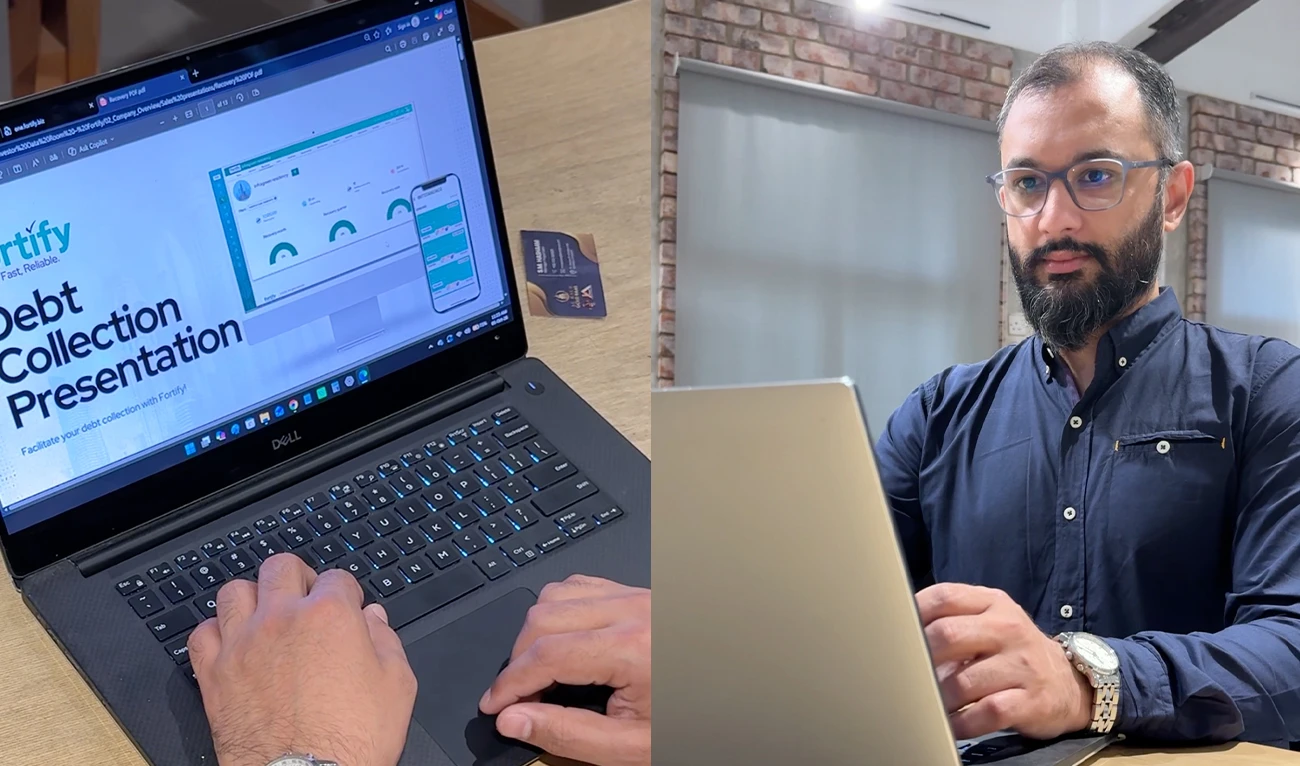
- Fortify says it secured Saudi investment license in February, incorporated in Kingdom in July
- Startup preparing local hires after adapting software to Saudi tax, cybersecurity requirements
KARACHI: A Pakistani property technology startup has incorporated in Saudi Arabia and is preparing to hire locally, its founders said this week, joining a growing number of foreign technology companies seeking opportunities created by the Kingdom’s push to digitize its vast real estate industry.
Karachi-based Fortify, founded in 2021, develops enterprise rees, customer relationship management, finance and property management on a single platform
The company began exploring the Saudi market after attending the LEAP technology conference in Riyadh in 2024 and says it secured an investment license from the Ministry of Investment in February before registering a Saudi company in July.
Its expansion comes as Saudi Arabia seeks to establish itself as a regional center for property technology, or PropTech, under Vision 2030, Crown Prince Mohammed bin Salman’s program to diversify the economy away from oil. The Kingdom’s Real Estate General Authority (REGA) has established a dedicated Saudi PropTech Hub to attract local and international technology companies, connect them with investors and allow firms to test new products and business models.
“Saudi Arabia is one of the largest markets within the GCC and, as far as Vision 2030 is concerned, we believe that real estate has real potential in terms of digital transformation within the Kingdom,” Syed Zain Ali, Fortify’s CEO and co-founder, told Arab News.
“We believe starting with Riyadh, capital of the Kingdom, would be the first priority for us for global expansion.”
Saudi authorities have increasingly promoted technology in real estate, spanning property management, brokerage and transactions to artificial intelligence, big data and smart-building systems. REGA says its PropTech program is designed both to attract international companies and develop regulations that allow new technologies and business models to enter the Saudi market.
Fortify said entering the Kingdom required adapting its products and operations to Saudi requirements covering taxation, cybersecurity and the storage of data inside the country.
“There are certain challenges when you go to a different market,” Ali said. “It could be compliance, it could be localized product, it could be cybersecurity problems related to data residing within the Kingdom.”
Ali said the company had worked to meet requirements related to Saudi Arabia’s Zakat, Tax and Customs Authority as well as cybersecurity regulations before expanding operations.
Fortify says it has also begun securing Saudi business. Ali said Keller Williams Saudi Arabia was using some of its customer relationship management, brokerage management and finance products, while the startup had signed an agreement with Riyadh-based real estate valuation company Muathamad.
Arab News could not independently verify the commercial arrangements.
The company is now recruiting Arabic-speaking and technical staff for its Saudi operations, its founders said.
“We successfully had the MISA license in February 2026. We have the company registered in July 2026,” Fortify co-founder Sidra Shakeel told Arab News. “Now the Iqama is in process. After that, we will start hiring.”
Fortify’s expansion has been supported by BridgeStart Pakistan, a government program run through state-owned technology fund Ignite to help Pakistani startups enter international markets. The program subsidizes costs including accelerator participation, travel and accommodation.
Shakeel said Fortify knew little about the Saudi market when its team first attended LEAP two years ago.
“We had no idea how things are managed over there, what kind of demand there is for software like us,” she said. “So that was the first time we tested the waters. We talked to people, we looked at what was important, we tried to build connections.”
The company was subsequently accepted into a Saudi accelerator and received BridgeStart support for its expansion, she said.
Fortify is part of a wider effort to connect Pakistani technology companies with the rapidly expanding Saudi market. Eight Pakistani startups last month completed a 12-week Saudi “soft-landing” accelerator run through BridgeStart, Ignite and Riyadh-based business expansion platform AstroLabs, according to the Pakistani government.
Syed Azfar Hussain, project director at the National Incubation Center Karachi, where Fortify was incubated, said Saudi Arabia was increasingly becoming a destination for Pakistani startups that previously looked primarily toward Western markets.
“There’s an increasing trend, especially since 2023-2024, that we have seen that most of the startups that used to eye opportunities in North America and Europe, now they are looking forward to have their businesses in Saudi Arabia,” Hussain told Arab News.
He said startups from the Karachi incubator were increasingly joining Saudi accelerators, establishing operations in co-working spaces and seeking local partners.
“The Kingdom of Saudi Arabia is not only facilitating these business startups, but the best part about it is a lot of scope for these businesses, especially in the GCC region,” Hussain said.
“So it’s a great opportunity for most of the tech businesses in Pakistan to work from Saudi Arabia and gain more markets.”
