


For more than two decades, Iraqi prime ministers have pledged to establish a basic principle of sovereignty: Only the government should possess the power to decide when the country goes to war and who carries weapons in its name. Yet successive leaders have been unable to turn that principle into reality.
Prime Minister Ali Al-Zaidi is now trying again. This time, however, the circumstances surrounding Iraq are different enough to raise an important question: Could he actually succeed?
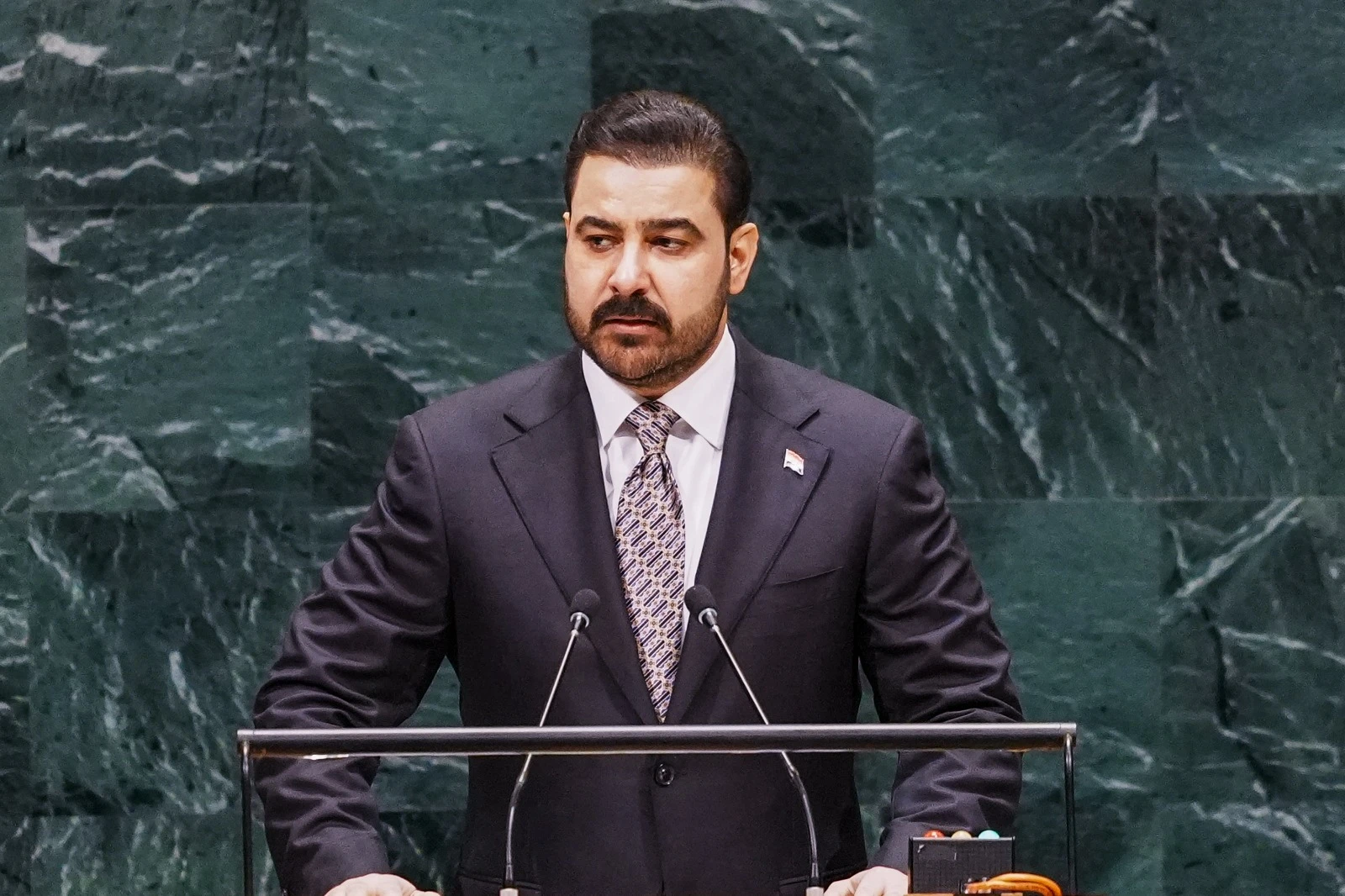
Speaking before the UN General Assembly, Al-Zaidi described a country that has paid an enormous price for decades of conflict. Iraqis, he said, have lost their children, their re finally moving beyond that era and toward stability and economic growth
At the center of that vision was a clear commitment. The Iraqi state must have the final say over matters of peace and war, while weapons and instruments of force must remain exclusively in the hands of constitutional institutions. Those words matter because the existence of powerful armed factions has been one of the greatest obstacles to Iraqi sovereignty since 2003.
Al-Zaidi initially tied his effort to Sept. 30 to coincide with the end of the mission of the US-led international coalition against Daesh. The timetable has since evolved into a phased process. It begins with a 90-day period during which armed factions refrain from attacks in exchange for assurances that US forces will not target them. The weapons handover would follow, with completion scheduled for June 30, 2027. Even that timetable is being challenged. Some factions are reportedly pushing for an extension until the end of next year.
The PM envisioned a country finally moving beyond that era and toward stability and economic growth
The reactions from Iraq’s armed groups reveal the difficulty ahead. Muqtada Al-Sadr and his Saraya Al-Salam have backed the principle of bringing arms under government authority. Asa’ib Ahl Al-Haq leader Qais Al-Khazali, an influential figure in the governing coalition, has also supported the initiative. However, the harder-line factions have responded differently. Kata’ib Hezbollah and Harakat Al-Nujaba, which are among the groups most closely aligned with Tehran, have resisted the initiative and rejected pressure to surrender their arsenals. That divide is significant.
Some militia leaders have spent years transforming battlefield power into political influence. They have seats, allies, businesses and interests they want to protect. For them, cooperation with Baghdad may offer a path from militia leadership to permanent political relevance. For groups whose power remains closely tied to Iran’s regional strategy, the calculation is different. Their weapons are not merely a means of protecting themselves inside Iraq. They are part of a wider network Tehran has spent decades building across the Middle East.
That is why Al-Zaidi’s challenge cannot be understood as an internal Iraqi dispute alone.
During a visit to Iraq in August, Esmail Ghaani, commander of Iran’s Quds Force, met leaders of the factions close to Tehran. Reports about those discussions made clear that Iran was deeply concerned about the future of its allies and opposed any outcome that would dismantle its influence. For Baghdad, this creates a delicate balance.
Washington has pressed the Iraqi government to deal with those militia groups operating beyond effective state command. The government in Tehran has every reason to preserve partners that provide it with political influence and strategic depth. Al-Zaidi, therefore, needs to strengthen Iraqi sovereignty without turning that effort into a confrontation fought on Iraqi soil between the US and Iran. But the regional landscape has shifted in ways that could give him an opportunity unavailable to many of his predecessors.
The regional landscape has shifted in ways that could give him an opportunity unavailable to many of his predecessors
Iran and its network of allies face growing pressure across the region. Tehran must devote reime, the conclusion of the international coalition’s mission removes one of the strongest arguments used by factions that describe themselves as part of a “resistance” movement. If foreign combat forces are no longer operating in Iraq, against whom are they resisting?
That question places militia leaders in a more difficult political position. Maintaining an independent military structure becomes harder to justify when the stated reason for possessing those arms is disappearing. But this should not be mistaken for an easy victory.
Iran may view Iraq as more important, not less, if its position elsewhere in the region is weakened. Iraqi factions also possess something that cannot simply be negotiated away: deep roots within the country’s political and economic system. Some have influence inside institutions they are supposedly being asked to submit to.
The prime minister must therefore do far more than collect weapons. He has to persuade or pressure armed organizations to give up thein the first place, which requires more than deadlines. Baghdad will need to offer a credible route for fighters to integrate into legitimate institutions, while drawing an unmistakable line between political participation and independent military power
There is also an economic reason for urgency. Al-Zaidi has repeatedly linked security with Iraq’s future development. Investors need more than contracts and incentives. They need confidence that the government controls its territory and that political disputes will not suddenly turn into armed confrontations.
His own credibility is now tied to delivering that stability. By raising the issue before the UN, Al-Zaidi transformed what could have remained an internal political negotiation into a public commitment. He has told Iraqis, Washington, Tehran and the international community what kind of state he intends to build.
The coming months will show whether those words represent a genuine turning point or another chapter in a familiar Iraqi story. If deadlines keep shifting while armed factions keep their arsenals and freedom of action, the prime minister will face a serious credibility problem. He will become another leader who promised authority would return to the state but found the militias stronger than his promises.
But success would leave a very different legacy.
If Al-Zaidi manages to bring weapons genuinely under government control without pushing Iraq into another internal conflict, he will have achieved something his predecessors repeatedly failed to accomplish. More importantly, he will have taken a decisive step toward restoring Iraq’s ability to determine its own future.
The equation is simple: Fail and the militias will define his legacy; succeed and he will redefine Iraq’s future by restoring the state’s authority and breaking Tehran’s hold.
Dalia Al-Aqidi is Senior Fellow at the Center for Security Policy. X: @DaliaAlAqidi
