
Photo-Illustration: Curbed; Photos: Brooklyn Property Group LLC, Zillow Rentals
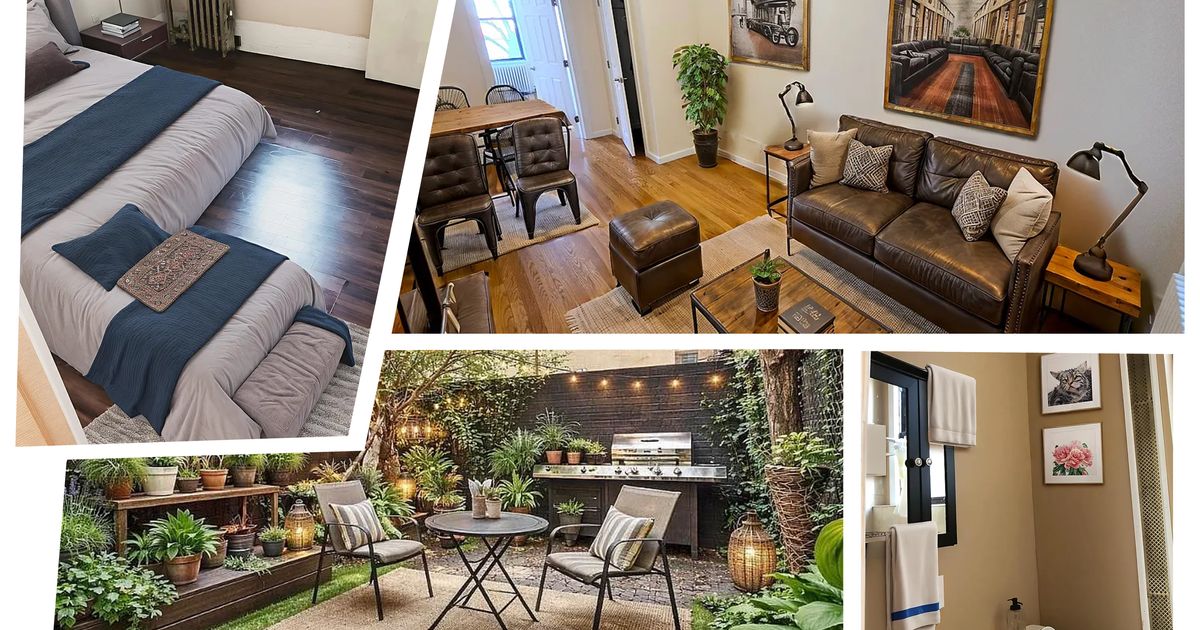
On a recent Saturday, Teo Bugbee was on line with 20 or so other people outside a Bed-Stuy brownstone, waiting to get a look at what seemed like a unicorn apartment. The one-bedroom, two-bath duplex on Tompkins Avenue was just over $2,300 a month and rent stabilized. The listing photos showed a recently renovated kitchen and a bedroom that was basically out of a West Elm catalogue. But once inside, Bugbee discovered the bedroom was actually a windowless basement. The walls were dirty, the lighting harsh. There was also a weird smell. The source, it turned out, was a trio of teacup piglets being cradled by a woman sitting on the floor of the apartment and rocking them in her arms. Bugbee overheard the broker ask another person touring the space, “So what do you think?” Then they heard the reply: “Well, it’s pretty fucking miserable.”
Along with everyone else who showed up that day, Bugbee had gotten got by the latest indignity of apartment hunting in New York City: AI staging. The list of insults faced by those of us trying to live here is pretty lengthy already. Rents are out of control; June saw all-time highs of $5,295 in Manhattan and $4,350 in Brooklyn. There are the obvious unknowns endemic to a search — Do the neighbors party late? Does the bathroom leak? What’s the rat situation like? Anything worth viewing tends to rent in a flash (which is why we’re increasing our own rents just to get any sort of edge). Yes, a bit of deception has long been standard in listing photos — a wide lens, a bit of color saturation to make a viewless window appear brighter — but the tools today are more sophisticated, cheaper, and pretty ubiquitous. The issue of what we might call apartment catfishing has even caught the mayor’s attention. He just included an AI-disclosure requirement among his 23 proposals to improve the housing market. (“You shouldn’t have to worry whether or not the apartment you are viewing online is real,” he recently said.)
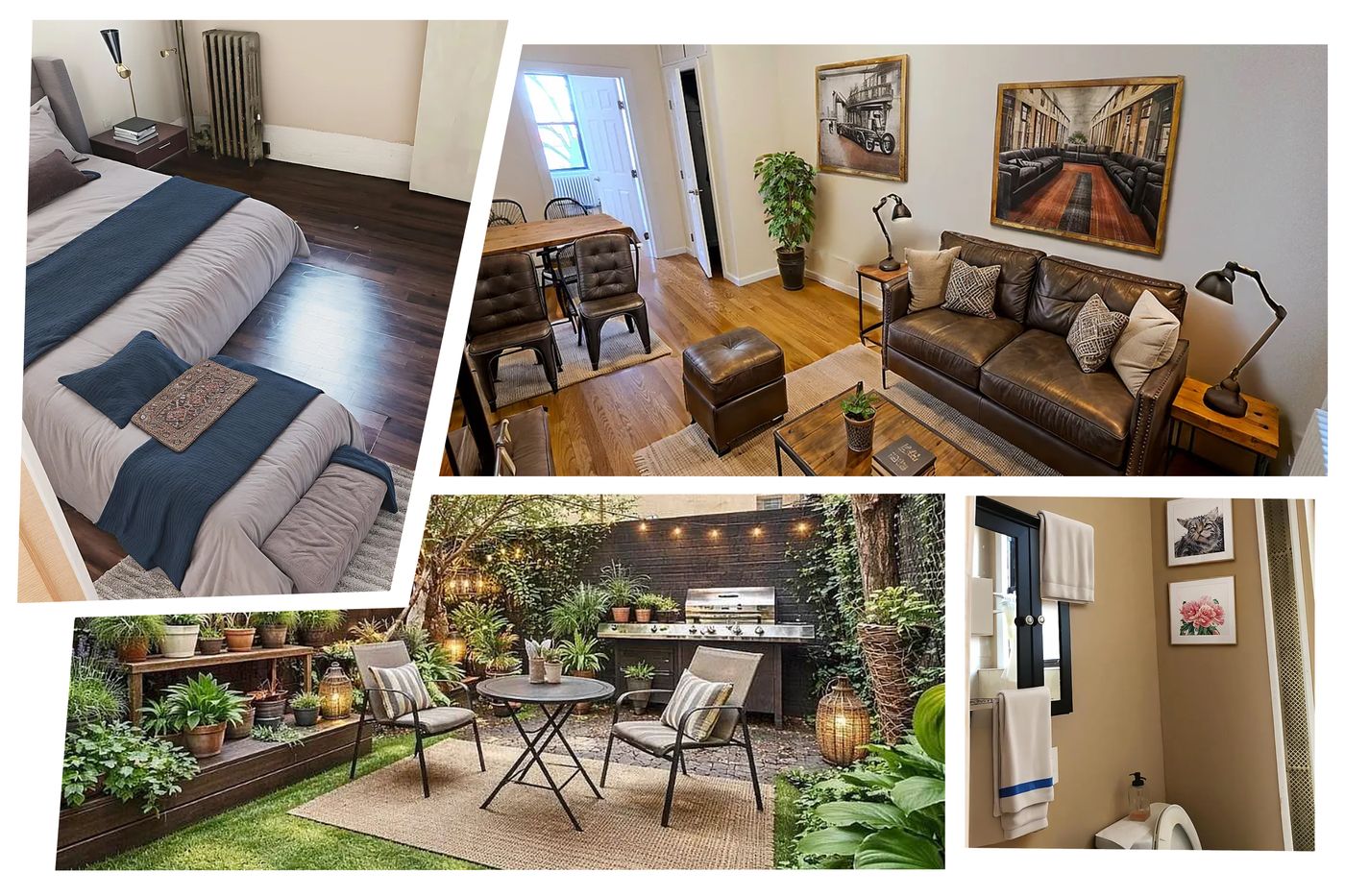
“It’s such a plague,” says Charlotte Rodgers, who is 31 and works as a jeweler. After getting priced out of her Greenpoint rental in February, she found herself on the market for the first time in four years. Things, she learned, had changed. She would click on StreetEasy listings for what appeared to be bright, perfectly finished apartments only to find photos at the end of the carousel of the actual space — often dark and dingy. In one case, there were visible holes in the ceiling. (All of which seem to violate the listing platform’s policies.) “It makes me feel like they think I’m stupid” she says. Other apartment seekers, in equal parts public-service announcement and grievance session, have been sharing their AI-listing horror stories: a clean one-bedroom in South Williamsburg with a grassy backyard and new vinyl-plank flooring was, in fact, a dump with gray subfloors. Some of what has been shared isn’t so much deceptive as glitchy and odd. In Fort Greene, a two-bedroom featured a staged bed with a nearly identical but smaller bed at its foot, and a third, even smaller bed below that. (This may be because, as Suzanne Goldklang, a real-estate agent with City Connections Realty who has used ChatGPT for virtual staging, explained, the programs are buggy. “You have to give it a ton of specific prompts … and even then it ignores the prompts,” she wrote.)
“People are taking it completely overboard,” says Anna Klenkar, an independent, tenant-side real-estate agent. The problem, she adds, is largely concentrated among “down-market brokers,” which means if it’s affordable and looks halfway decent, it may be a fakeout. Brokers whose listing photos had clearly been staged with AI didn’t respond to my calls, but others I talked to told me they have a professional obligation to portray a client’s property in the best light possible. Also, they insist, it’s always a light touch: Maybe they’ll add a couch to help clients envision what the space could be. Maybe they’ll blend out some of the cracks in the wall or water stains on the ceiling. (Because the landlord is totally going to fix those!) The apartment you see is the apartment you’ll get, they insist, albeit one that has been slightly yassified to get you in the door and see the potential.
“Anything that has furniture in it seems 50-50 AI,” says Julian Lim, a documentary filmmaker. During his search for a sub-$3,500 two-bedroom last year, he and his wife saw a Greenwood listing with an industrial kitchen table that seemed to be growing chairs and leather cushions that were inexplicably on the counter. There was also an office window that had been turned into a second doorway in an ad for an Astoria two-bed. At a certain point, he says of the brokers, “you’re not taking care to even make sure it’s accurately representing your space.”
For most people, AI listing photos largely just create an annoyance, a wasted afternoon touring a ramshackle one-bedroom they might not have otherwise given a second thought. But for people who live out of state and need to look for an apartment remotely, the stakes get a bit higher. Joohee Na, who works in educational AI tech, was looking for apartments here while still living in Los Angeles. She came across a listing for a bright one-bedroom, one-bath in Nomad priced at $2,650. Na knew the market was competitive and wanted to move quickly to lock it in by giving the brokerage a $500 “good faith” deposit. “I thought it would be just fine to just see the virtual pictures online and it would be pretty accurate,” she says. Her parents weren’t so sure and convinced her to fly out to see the place in person before handing over any cash. It turned out the ground-floor apartment was in a mixed-use building and looked nothing like the pictures. The place was dark, the fixtures dated, the backyard ratty and overgrown. “This one was just like a straight-up lie,” she says.
And it may not be the kind of thing we can warn one another away from — the market is just that toxic. After leaving the piglet one-bedroom, Bugbee tried to warn the people still waiting to get inside. “I was like, ‘It doesn’t look like the photos! It doesn’t look like the photos at all!’” Bugbee says. No one really budged. Was this some kind of trick to get an edge on the place? (That is, after all, what Bugbee had assumed about the person who came out of the place earlier saying it had flooded.) People, it seemed, needed to see for themselves. And apparently, someone still wanted to live there. According to StreetEasy, the apartment rented in late June.
