
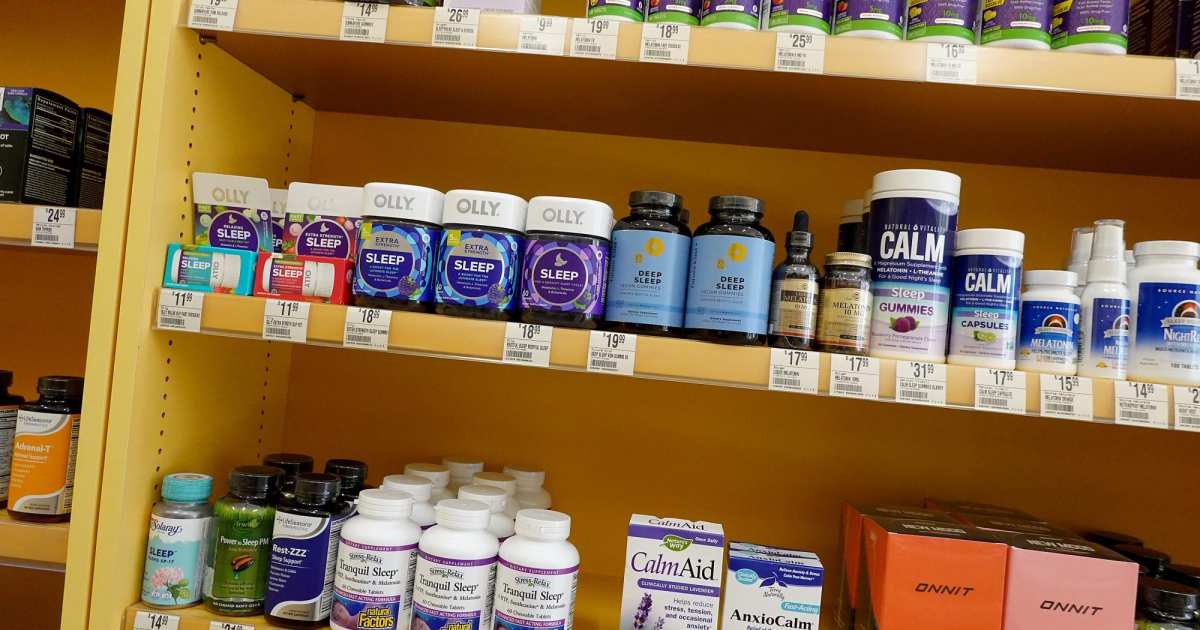
Search interest in sleep supplements has spiked as more people look for alternatives to prescription sleep aids and endless doomscrolling. Below is what dietitians, physicians and sleep researchers actually recommend, drawing on specialists cited by Eating Well, Johns Hopkins, WebMD, the Sleep Foundation and Yahoo Health.
Does Magnesium Actually Help You Sleep?
Magnesium glycinate can support better sleep by calming the nervous system before bed. It’s one of the few supplements doctors say they feel comfortable recommending given its safety profile.
Saema Tahir, M.D., told Eating Well, “Magnesium glycinate is one of the few supplements I feel confident recommending because the safety profile is strong and the rationale is solid. It activates the parasympathetic nervous system and supports GABA receptor activity, essentially helping your brain and body shift into a calmer state before bed.”
The rationale hinges on the parasympathetic nervous system, which governs the body’s rest-and-digest state. Tahir’s recommendation specifically flags glycinate, one of several magnesium forms available on shelves.
How Does Melatonin Work and When Should You Take It?
Melatonin doesn’t force you to sleep. It signals your body that bedtime is approaching, which is why sleep experts recommend it mainly for short-term use like jet lag, insomnia flares or shifting your schedule earlier.
Johns Hopkins sleep expert Luis F. Buenaver, Ph.D., C.B.S.M., told Hopkins Medicine, “Your body produces melatonin naturally. It doesn’t make you sleep, but as melatonin levels rise in the evening it puts you into a state of quiet wakefulness that helps promote sleep.”
He added, “Most people’s bodies produce enough melatonin for sleep on their own. However, there are steps you can take to make the most of your natural melatonin production, or you can try a supplement on a short-term basis if you’re experiencing insomnia, want to overcome jet lag, or are a night owl who needs to get to bed earlier and wake up earlier, such as for work or school.”
Does Ashwagandha Improve Sleep Quality?
Ashwagandha may improve sleep quality, especially among people experiencing stress or insomnia, but more research is needed. Research suggests ashwagandha, an adaptogenic herb traditionally used to help the body manage stress, produces small but meaningful improvements in sleep, especially for people with insomnia who take at least 600 milligrams a day for eight weeks or longer.
Leah Rosenbaum, writing for WebMD said, “One study showed taking 300 milligrams of the herb two times a day improved sleep, and another found that people who took 120 milligrams of an ashwagandha extract reported a significant improvement in sleep quality. A meta-analysis of five studies looked at ashwagandha’s impact on sleep in humans. It found that the herb had a small but significant impact on improving sleep, especially in people who had insomnia. The benefits were greatest when people took at least 600 milligrams of ashwagandha each day for 8 weeks or longer.”
What Do Valerian Root and L-Theanine Do for Sleep?
Valerian root and L-theanine are two of the gentler nighttime options that show up on dietitian lists, and neither is designed to force sleep. Both work by supporting relaxation instead.
Valerian root is an herbal supplement traditionally used for relaxation and sleep. L-theanine, an amino acid naturally found in green tea, may promote relaxation by increasing calming brain chemicals, including GABA, dopamine and serotonin, without causing heavy sedation. Since neither acts as a strong sedative, both are typically presented as tools that help the body ease into rest rather than as direct sleep inducers, which is why they often appear in evening blends alongside other calming ingredients.

New research is reframing dreams not as random mental noise, but as one of the clearest signals of how well your body is actually resting. Here’s what scientists now know about dreams, REM sleep and what your nightly patterns may be flagging. What Do Your Dreams Say About Your Sleep Quality? Think of your dreams […]
Can CBD Help With Sleep and Insomnia?
CBD may help improve sleep indirectly, mainly by reducing the anxiety that keeps many people with insomnia awake. Evidence is still developing, and CBD remains legally restricted in some places.


CBD, or cannabidiol, interacts with the body’s endocannabinoid system, which plays a role in stress, mood and sleep regulation. Lauren Fountain wrote for the Sleep Foundation, “People who suffer from insomnia experience difficulty falling asleep or staying asleep at night. Because of their history of poor sleep, people with insomnia may suffer from anxiety about getting inadequate sleep, which can then increase sleeplessness at night. Given the potential positive outcomes of CBD treating anxiety, it is speculated that CBD may also help reduce the anxiety associated with insomnia.”

If you’ve ever had trouble sleeping, you know how difficult it can be to finally get a healthy amount of rest. You need it to function, but sleep can be elusive in so many frustrating ways. Whether you find yourself dealing with insomnia or low-quality sleep, it can be maddening to face the day with […]
Does Tart Cherry Juice Really Improve Sleep?
Tart cherry juice may offer modest sleep benefits, particularly for older adults and people experiencing insomnia or disrupted sleep, thanks to naturally occurring melatonin and antioxidant compounds.
It’s one of the few sleep aids on this list that shows up as a food rather than a capsule. Tart cherries naturally contain melatonin and antioxidant compounds called anthocyanins. “A small glass of tart cherry juice is my ‘secret’ to sleeping better,” Jackie Newgent, RDN, culinary nutritionist, told Yahoo Health. “The juice may help play a role in slightly improving sleep duration and quality, especially for older people or those with insomnia.”
