
As discussions at the UN Climate Change Conference (COP29) in Baku over how to finance climate action remain gridlocked, Southern Africans are learning that some “renewable energy” might not be renewable after all in an age of climate age.
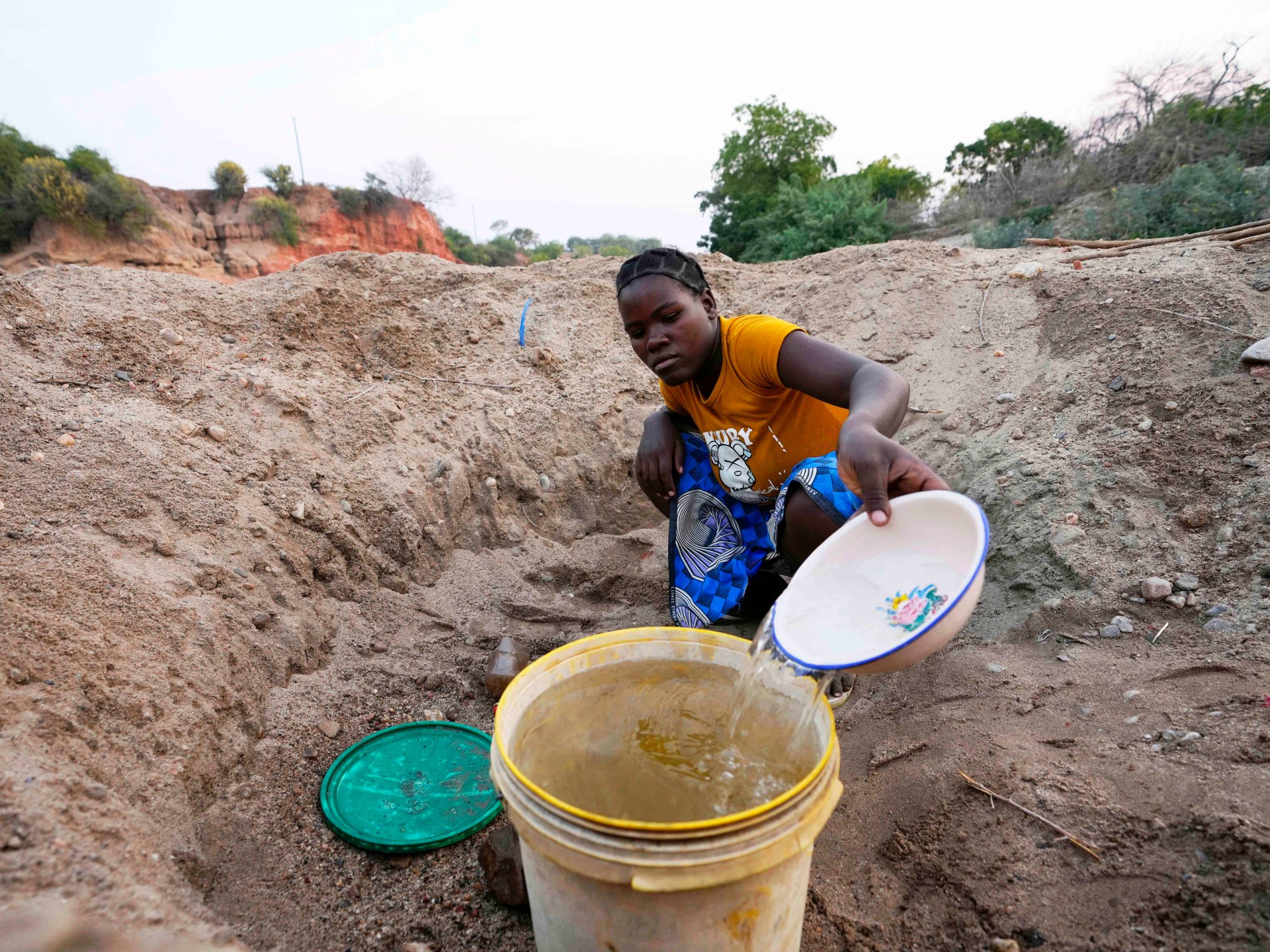
This year, Zambia and Zimbabwe experienced a major drought that devastated both countries. It destroyed harvests and sent the Zambezi River’s water flows to an historic low.
For decades, the Kariba Dam on the River had provided the bulk of electricity consumed in Zambia and Zimbabwe. However, in September, Zambian officials signalled that, owing to desperately low water levels, only one out of six turbines on its side of the lake could continue to operate.
Entire cities have been deprived of electricity, sometimes for days on end. Sporadic access to power has become the norm since, in 2022, record low rainfall led to a glaring imbalance between the water intake level at Lake Kariba – the world’s biggest dam reservoir – and water consumption by Zimbabweans and Zambians. This has hit hard urban households, 75 percent of which normally have access to electricity.
Rural areas, too, are suffering from the dramatic reduction in precipitation. Zambia is experiencing its driest agricultural season in more than four decades. The worst-affected provinces usually produce half of the annual maize output and are home to more than three-quarters of Zambia’s livestock population, which is reeling from scorched pastures and water scarcity.
Crop failure and livestock losses are fuelling food inflation. UNICEF has reported that more than 50,000 Zambian children under the age of five are at risk of falling into severe wasting, the deadliest form of malnutrition. Zambia has also been battling a cholera outbreak with more than 20,000 reported cases, as access to water has become increasingly scarce. This is a water, energy and food emergency all at once.
While many are blaming climate change for these calamities, its effect on weather has only exacerbated an already existing crisis. This grave situation is the consequence of two interrelated policy choices that are presenting massive challenges not just in Zambia, but across much of Africa.
First is the prioritisation of urban areas over rural ones in development. Zambia’s Gini coefficient – a measure of income inequality – is among the world’s highest. While workers in cities are much more likely to earn regular wages, the poorest layers of the population depend on agricultural self-employment and the vagaries of the climate.
The massive gap between rich and poor is not accidental; it is by design. For instance, tax reforms in recent decades have benefitted wealthy urban elites and large rural landowners, with subsistence farmers and agricultural labourers left behind.
The result is that children in Zambia’s towns enjoy much more reliable access to an adequate diet, clean water, electricity and toilets than their rural peers. If 15,000 Zambian children die annually in rural districts due to a preventable disease such as diarrhoea and Zambia has for decades had one of the highest rates of malnutrition and stunting in Africa, a pro-urban bias in policies and budgets is a major culprit.
That bias is also evident in coverage of the current crisis, which concentrates on urban dwellers being deprived of electricity because of the cuts at Kariba rather than the nine-tenths of Zambia’s rural population that have never had any access to electricity.
Second is the enduring preference of many African governments for hydropower. Across much of the continent, the penchant for hydroelectric plants is a colonial legacy eagerly continued after independence; Zambia and its Kariba Dam are cases in point.
Dams can provide flood control, enable year-round irrigation and hydroelectric power and, in the age of global warming, their reservoirs can manage extreme weather events while their energy is renewable and clean – or so their proponents purport.
Over the last two decades, billions of dollars have been spent on upgrading or building dams in Ghana, Liberia, Rwanda, Tanzania, Ethiopia and elsewhere. Despite the crisis at Kariba, where the reservoir has not been at full capacity since 2011, and at the smaller Kafue Gorge, Lower Kafue Gorge, and Itezhi-Tezhi Power Company hydropower plants, Zambia, too, wants to further boost its capacity through the $5bn Batoka Gorge Hydro project. This appears foolhardy when the global trend is that climate change is undercutting hydropower generation and irrigation ability.
Moreover, it is important to emphasise that the distributional effects of dams are not neutral. They are constructed in rural areas, but their main beneficiaries usually reside elsewhere. While dams provide, or provided, relatively reliable and affordable electricity to urban constituencies and mining interests that matter to governments, the people and ecosystems in the vicinity of the project often suffer.
Kariba was built between 1955 and 1959 by British colonial powers without an environmental impact assessment and caused the displacement of tens of thousands of Tonga Goba people who have suffered a long history of broken promises pertaining to compensation and resettlement.
They, like the 90 percent of other rural Zambians who lack access to electricity, have historically not enjoyed the spoils of the dam while successive Zambian governments have celebrated Kariba as a symbol of Zambian nationhood and Southern African brotherhood.
Climatic changes, like big dams, do not affect everyone equally. The simultaneous crises in water, energy and food systems underline that in Zambia, and many other African countries, fundamental decisions must be urgently made.
Rural dwellers should not be asked to bear the brunt of debt repayment and related austerity any more. They cannot be compelled to adapt to climatological havoc and the broader economic malaise on their own.
Zambia and other African countries need to ensure that rural areas and their needs in terms of reliable and affordable access to water, energy and food are prioritised. The necessary political will and budgets for that must be made available.
The electricity cuts and crop failures engendered by the latest drought, once again, point to the injustices and risks associated with urban bias and big dams. Global warming will only enhance these pathologies – unless resolutely different paths are taken.
The views expressed in this article are the author’s own and do not necessarily reflect Al Jazeera’s editorial stance.
