
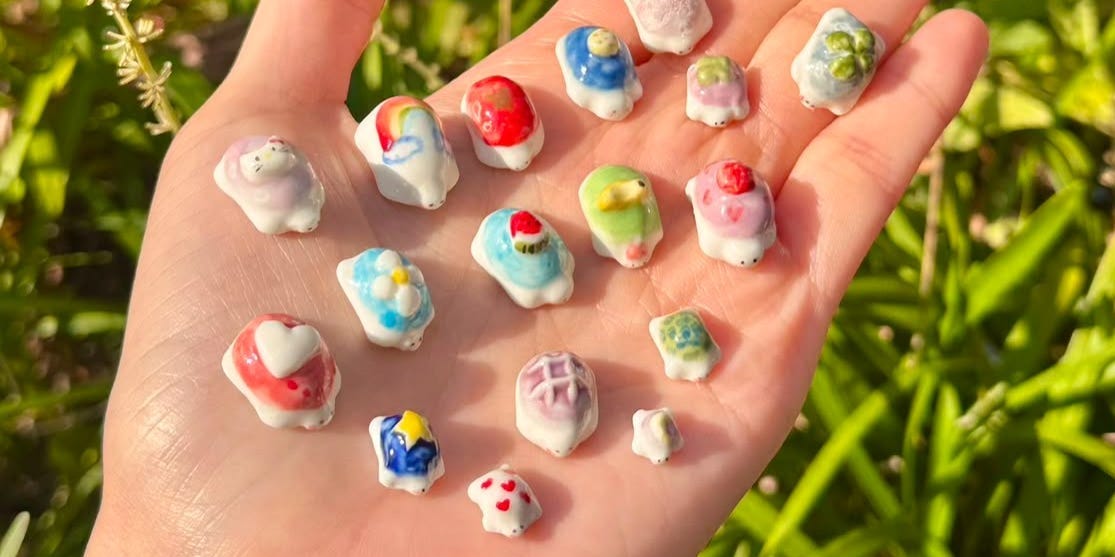
Gen Z small luxuries have become even smaller in South Korea, where a new trend of baby turtle charms is flourishing.
Turtles have long been seen as symbols of longevity in South Korea because of their long life spans. Now, they’re getting a rebrand, with Gen Zers in the country sticking cute miniature turtles onto their phones as lucky charms.
They can customize the type of luck they’re after, too. A popular seller on Instagram, “Bora_and,” with 60,000 followers, sells tiny adhesive turtles in different colors to represent different types of luck — such as green for health, yellow for wealth, and pink for love.
At “Bora_and,” customers can gamble on the luck they’re getting by buying two random turtles for 3,500 won, or $2.40.
Grown from K-Pop roots
The trend went viral, as most trends do in South Korea, after K-pop stars were spotted doing it. Dino, the singer from the megahit boy band Seventeen, was seen showing off a pair of turtles on his phone during a Weverse livestream on July 20. The turtles’ colors were similar to Seventeen’s band colors — rose quartz and serenity — and were meant to represent health and wealth.
Singer Choi San from the band Ateez and Nayeon from the girl group Twice have also jumped on the trend. Nayeon had three different-colored turtles on her phone case — blue for success, pink for love, and yellow for wealth.
Sung Hanbin, the leader of the boy band Zerobaseone, spotlighted local ceramic artist Selynn Hwang while showcasing his turtle charms during a livestream.
Sung’s hand-painted charms were more customized. His three turtles had designs of rice balls, Pokémons, and pink clovers.
An artist cashing in on the trend
Hwang, a 26-year-old ceramic artist based in Seoul, was among the first to cater to this trend. Her journey with turtles started in 2023, when she made miniature turtles for her university graduation exhibition and started selling them at flea markets around Seoul.
Selynn Hwang
She now handmakes hundreds of tiny porcelain turtles each week, painstakingly glazing them with symbols like hearts, coins, and clovers.
She also makes custom turtles representing different professions, like a firefighter turtle and a chef turtle. For a customer from the US, she painted the American flag on a tiny turtle.
The shoutout from a boy band member — Zerobaseone’s Sung — sent hordes of fans to her pop-ups.
She prices her handmade turtles between 10,000 and 20,000 won, or $7 to $14. Custom turtles are priced higher.
Hwang said she thinks the turtles have become popular because they’re small beacons of hope and positivity in the busy, stressful lives of young professionals.
“It combines that emotional meaning with a cute and personal design,” she said. “People can choose a turtle that represents what they wish for.”
Selynn Hwang
She said that people don’t necessarily believe the turtle will magically change their lives, but rather becomes a reminder that good things can happen.
Riding the wave of collectibles
The turtle charm trend comes at a time when collectibles are ultra-hot, and not just in South Korea.
Led by a demographic dubbed “kidults,” the rise in collectibles reflects economic stress on cash-squeezed younger generations, who are splurging on small-ticket items.
The past two years have been characterized by bag charms like Pop Mart’s Labubu and Jellycats, as well as by framed photocards of pop artists adorning bags around the world.
Selling and collecting Pokémon trading cards and K-pop photo cards have become a big business. Blindbox toys like Sonny Angels and Smiskis have amassed a massive global cult following.
