Close Menu

    Subscribe to Updates

    Get the latest creative news from FooBar about art, design and business.

    What's Hot

    What Real Estate Agents Need To Know About Cognitive Impairment

    December 10, 2024

    Will 2025 finally be a ‘normal’ housing market?

    December 10, 2024

    The Customer Is Always Right, But What If They’ve Been Misinformed?

    December 10, 2024
    Facebook X (Twitter) Instagram
    Trending
    • What Real Estate Agents Need To Know About Cognitive Impairment
    • Will 2025 finally be a ‘normal’ housing market?
    • The Customer Is Always Right, But What If They’ve Been Misinformed?
    • eXp, Weichert say Gibson plaintiffs’ motion is all about attorneys’ fees
    • Americans More Optimistic Home Prices and Mortgage Rates Have Peaked
    • EasyKnock abruptly shuts down its sale-leaseback platform
    • Under-The-Radar NAR Nonprofit May Have Hidden GOP Agenda
    • NAR’s nonprofit funds conservative groups
    Facebook X (Twitter) Instagram
    Industry Movement
    • Home
    • Entertainment
    • Business
    • News
    • Real Estate
    Industry Movement
    Home»News»The Tata family member who became a British MP and fought for India’s freedom
    News

    The Tata family member who became a British MP and fought for India’s freedom

    adminBy adminOctober 20, 2024No Comments0 Views
    Facebook Twitter Pinterest LinkedIn WhatsApp Reddit Tumblr Email
    Share
    Facebook Twitter LinkedIn Pinterest Email


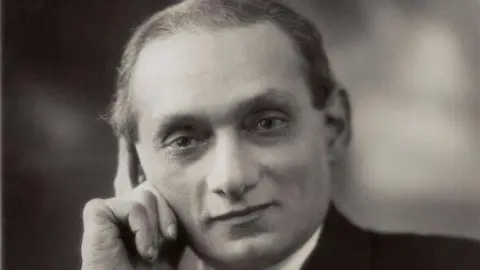
    Picryl Black and white image of Shapurji SaklatvalaPicryl

    Shapurji Saklatvala was the nephew of Jamsetji Nusserwanji Tata, who founded the Tata Group

    The name Shapurji Saklatvala may not be one that leaps out of the history books to most people. But as with any good tale from the past, the son of a cotton merchant – who was a member of India’s supremely wealthy Tata clan – has quite a story.

    At every turn, it seems his life was one of constant struggle, defiance and persistence. He shared neither the surname of his affluent cousins, nor their destiny.

    Unlike them, he would not go on to run the Tata Group, which is currently one of the world’s biggest business empires and owns iconic British brands like Jaguar Land Rover and Tetley Tea.

    He instead became an outspoken and influential politician who lobbied for India’s freedom in the heart of its coloniser’s empire – the British Parliament – and even clashed with Mahatma Gandhi.

    But how did Saklatvala, born into a family of businessmen, pursue a path so different from his kin? And how did he blaze a trail to become one Britain’s first Asian MPs? The answer is as complex as Saklatvala’s relationship with the his own family.
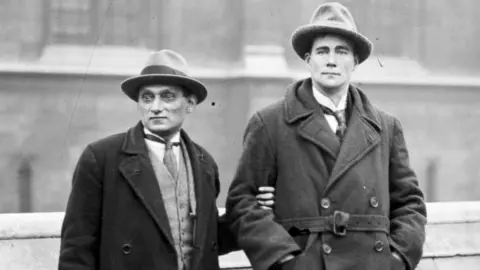
    Getty Images Communist Party of Great Britain MPs Saklatvala Shapurji (1874 – 1936), left) for Battersea, and Walton Newbold (1888 – 1943) for Motherwell, at the opening of parliament, London, UK, in November 1922. (Photo by Topical Press Agency/Hulton Archive/Getty Images)Getty Images

    Communist Party of Great Britain MPs Saklatvala Shapurji (left) and Walton Newbold (right)

    Saklatvala was the son of Dorabji, a cotton merchant, and Jerbai, the youngest daughter of Jamsetji Nusserwanji Tata, who founded the Tata Group. When Saklatvala was 14 years old, his family moved into Esplanade House in Bombay to live with Jerbai’s brother (whose name was also Jamsetji) and his family.

    Saklatvala’s parents separated when he was young and so, the younger Jamsetji became the main paternal figure in his life.

    “Jamsetji always had been especially fond of Shapurji and saw in him from a very early age the possibilities of great potential; he gave him a lot of attention and had great faith in his abilities, both as a boy and as a man,” Saklatvala’s daughter, Sehri, writes in The Fifth Commandment, a biography of her father.

    But Jamsetji’s fondness of Saklatvala made his elder son, Dorab, resent his younger cousin.

    “As boys and as men, they were always antagonistic towards each other; the breach was never healed,” Sehri writes.

    It would eventually lead to Dorab curtailing Saklatvala’s role in the family businesses, motivating him to pursue a different path.

    But apart from family dynamics, Saklatvala was also deeply influenced by the devastation caused by the bubonic plague in Bombay in the late 1890s. He saw how the epidemic disproportionately impacted the poor and working classes, while those in the upper echelons of society, including his family, remained relatively unscathed.

    During this time, Saklatvala, who was a college student, worked closely with Waldemar Haffkine, a Russian scientist who had to flee his country because of his revolutionist, anti-tsarist politics. Haffkine developed a vaccine to combat the plague and Saklatvala went door-to-door, convincing people to inoculate themselves.

    “Their outlooks had much in common; and no doubt this close association between the idealist older scientist and the young, compassionate student, must have helped to form and to crystallise the convictions of Shapurji,” Sehri writes in the book.
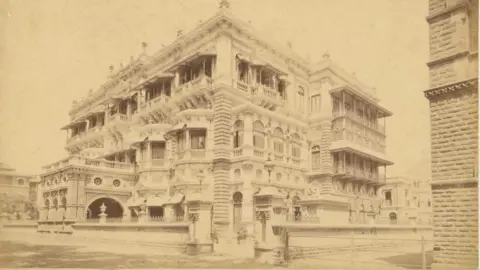
    Getty Images MUMBAI, INDIA - NOVEMBER 08, 2007: Old Tata House - Esplanade House. (Photo by Kapil Patil/Hindustan Times via Getty Images)Getty Images

    A photo of Esplanade House, the Tata’s house in Bombay

    Another important influence was his relationship with Sally Marsh, a waitress he would marry in 1907. Marsh was the fourth of 12 children, who lost their father before becoming adults. Life was tough in the Marsh household as everybody had to work hard to make ends meet.

    But the well-heeled Saklatvala was drawn towards Marsh and during their courtship, he was exposed to the hardships of Britain’s working class through her life. Sehri writes that her father was also influenced by the selfless lives of the Jesuit priests and nuns under whom he studied during his school and college years.

    So, after Saklatvala travelled to the UK in 1905, he immersed himself in politics with an aim to help the poor and the marginalised. He joined the Labour Party in 1909 and 12 years later, the Communist Party. He cared deeply about the rights of the working class, in India and in Britain, and believed that only socialism – and not any imperialist regime – could eradicate poverty and give people a say in governance.

    Saklatvala’s speeches were well received and he soon became a popular face. In 1922, he was elected to parliament and would serve as an MP for close to seven years. During this time, he advocated ferociously for India’s freedom. So staunch were his views that a British-Indian MP from the Conservative Party regarded him as a dangerous “radical communist”.

    During his time as an MP, he also made trips to India, where he held speeches to urge the working class and young nationalists to assert themselves and pledge their support for the freedom movement. He also helped organise and build the Communist Party of India in the areas he visited.
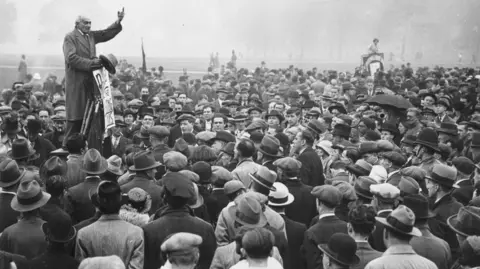
    Getty Images 24th September 1933: Addressing crowds at Speakers' Corner in Hyde Park, Communist MP Saklatvala Shapurji calls for the release of the Reichstag Fire suspects in Germany. The fire, which burned down the Reichstag parliament building, was allegedly started by Communist Party member Marinus van der Lubbe and gave the German government a pretext to introduce a state of emergency across the country and suppress opponents of the Nazi regime. (Photo by Keystone/Getty Images)Getty Images

    A photo of Saklatvala giving a speech in Hyde Park in 1933

    His strident views on communism often clashed with Mahatma Gandhi’s non-violent approach to defeat their common adversary.

    “Dear Comrade Gandhi, we are both erratic enough to permit each other to be rude in order to freely express oneself correctly,” he wrote in one of his letters to Gandhi, and proceeded to mince no words about his discomfort with Gandhi’s non-co-operation movement and him allowing people to call him “Mahatma” (a revered person or sage).

    Though the two never reached an agreement, they remained cordial with each other and united in their common goal to overthrow British rule.

    Saklatvala’s fiery speeches in India perturbed British officials and he was banned from traveling to his homeland in 1927. In 1929, he lost his seat in parliament, but he continued to fight for India’s independence.

    Saklatvala remained an important figure in British politics and the Indian nationalist movement until his death in 1936. He was cremated and his ashes were buried next to those of his parents and Jamsetji Tata in a cemetery in London – uniting him once again with the Tata clan and their legacy.

    Read more BBC stories on forgotten Indians:


    Source link

    Share. Facebook Twitter Pinterest LinkedIn Tumblr Telegram Email
    admin

    Related Posts

    US state of Alabama carries out third execution by nitrogen gas | Crime News

    November 22, 2024

    Old is gold: Why Bollywood is turning to re-releases amid string of flops | Cinema News

    November 22, 2024

    The rise and fall of Matt Gaetz in eight wild days

    November 22, 2024
    Leave A Reply Cancel Reply

    Recent Posts
    • What Real Estate Agents Need To Know About Cognitive Impairment
    • Will 2025 finally be a ‘normal’ housing market?
    • The Customer Is Always Right, But What If They’ve Been Misinformed?
    • eXp, Weichert say Gibson plaintiffs’ motion is all about attorneys’ fees
    • Americans More Optimistic Home Prices and Mortgage Rates Have Peaked
    Recent Comments
      Archives
      • December 2024
      • November 2024
      • October 2024
      • September 2024
      • August 2024
      Categories
      • Business
      • Entertainment
      • News
      • Real Estate
      Meta
      • Log in
      • Entries feed
      • Comments feed
      • WordPress.org
      Demo
      Top Posts

      How To Avoid These 12 Costly Business Traps

      November 30, 202430

      Gen Zer Won NYC Housing Lottery, Pays $1.6K Rent for Queens Apartment

      October 1, 202427

      SEC Chair Gary Gensler will step down Jan. 20, making way for Trump replacement

      November 21, 202424

      Better Pay, More Time Off: What Real Estate Agents Want This Labor Day

      August 31, 202424
      Don't Miss
      Real Estate

      What Real Estate Agents Need To Know About Cognitive Impairment

      By adminDecember 10, 20245

      Senior real estate specialist Nikki Buckelew writes that understanding cognitive impairment among seniors is about…

      Will 2025 finally be a ‘normal’ housing market?

      December 10, 2024

      The Customer Is Always Right, But What If They’ve Been Misinformed?

      December 10, 2024

      eXp, Weichert say Gibson plaintiffs’ motion is all about attorneys’ fees

      December 10, 2024
      Stay In Touch
      • Facebook
      • Twitter
      • Pinterest
      • Instagram
      • YouTube
      • Vimeo

      Subscribe to Updates

      Get the latest creative news from SmartMag about art & design.

      Demo
      Our Picks

      What Real Estate Agents Need To Know About Cognitive Impairment

      December 10, 2024

      Will 2025 finally be a ‘normal’ housing market?

      December 10, 2024

      The Customer Is Always Right, But What If They’ve Been Misinformed?

      December 10, 2024
      Most Popular

      How To Avoid These 12 Costly Business Traps

      November 30, 202430

      Gen Zer Won NYC Housing Lottery, Pays $1.6K Rent for Queens Apartment

      October 1, 202427

      SEC Chair Gary Gensler will step down Jan. 20, making way for Trump replacement

      November 21, 202424
      Legal Pages
      • About Us
      • Disclaimer
      • DMCA Notice
      • Privacy Policy

      Type above and press Enter to search. Press Esc to cancel.