
The war in Ukraine has thrown into bold relief the possibility of a future conflict between Russia and NATO.
Not since the Cold War have tensions been so high. Russia is deeply involved in a war that shows no sign of slowing down or stopping.
Russia has learnt and improved from its disastrous start to the invasion. But has it improved enough to be able to take on the largest military alliance in history?
Russia’s army
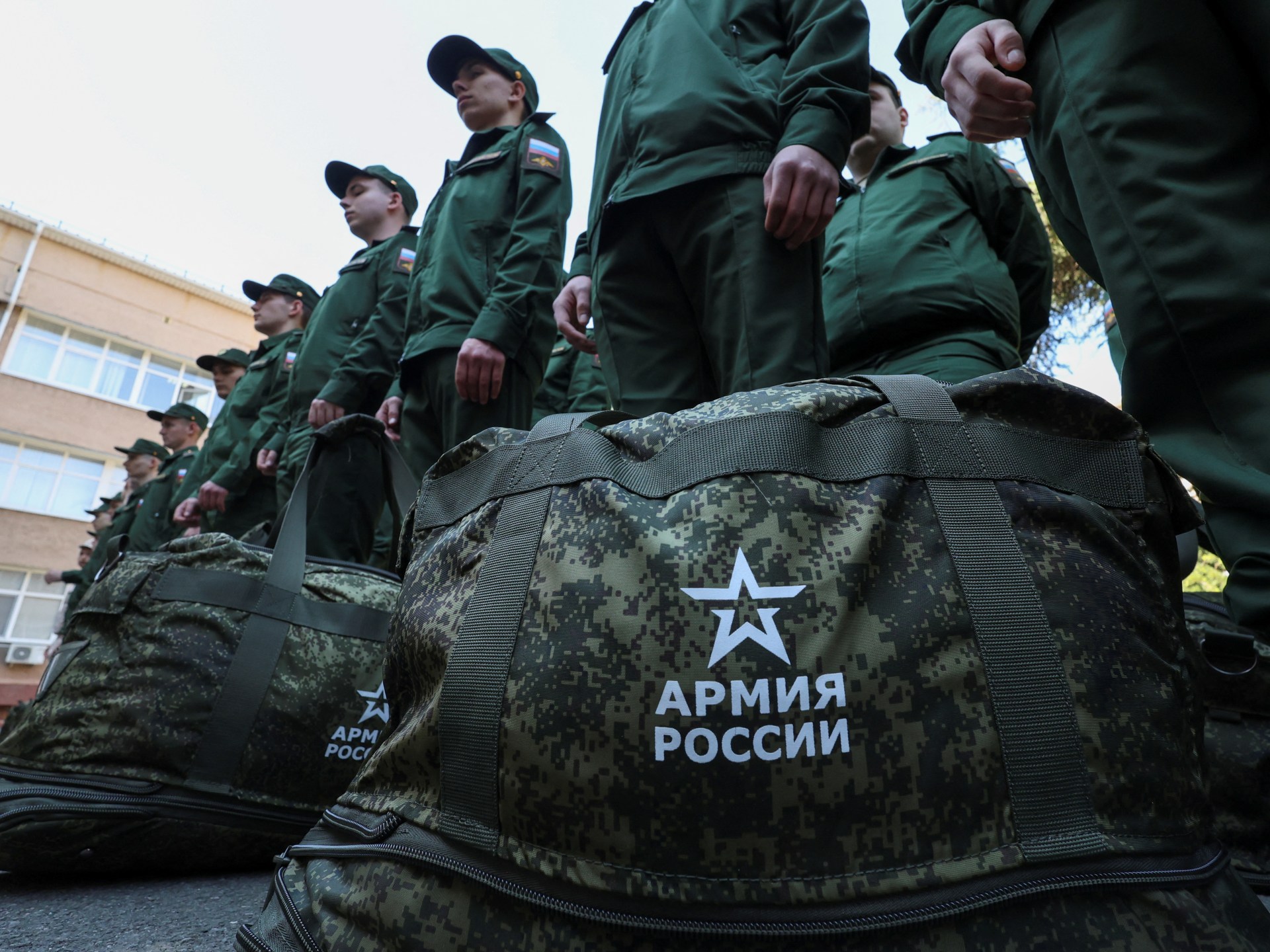
Russia’s ground forces have seen rapid expansion as a result of the war in Ukraine.
Quality has not kept pace as larger numbers have not offset poor training and huge equipment shortages. For Russia, the only path to a military victory is through attrition and the use of its larger armed forces to ground down the smaller Ukrainian army.
Moscow has slowly absorbed the costly lessons from the beginning of the war. Poor-quality troops are better suited for defence and the adroit use of extensive defensive lines in southern Ukraine’s flat, open countryside helped blunt Ukraine’s counteroffensive in 2023. Russia has learnt that only better-quality soldiers can be used for offensive action.

Elite units like the marine infantry, airborne troops known as VDV, and Russia’s Spetsnaz special forces now receive better equipment, longer training and better officer training.
They are also being dramatically expanded. The Marines for example are being increased from five brigades or about 20,000 soldiers to five divisions – meaning about 75,000 soldiers.
Russia’s military planners are moving rapidly away from the brigade as the basic military unit to the division.
The extremely high death rate has taught Russia that a brigade cannot sustain heavy losses and still be effective. A larger division can absorb these losses and fight until replacements arrive.
Tanks, tanks and more tanks
While tanks were almost written off as obsolete before the war, both Russia and Ukraine have leant heavily on tank forces in their battles for territory. But losses on both sides have been high as drones, mines and a lack of an effective air force take their toll.
Losses of Russian tanks have been especially high. According to recent figures from Kyiv, Moscow has lost more than 8,000 since the war began. Western estimates suggest that, with Moscow’s economy now on a war footing, it can manufacture 1,500 tanks a year, although a large portion of these is made up of refurbished older models.
Despite Russian efforts, the production of newer T-90 models remains slow. Frontline units are now expected to cross open ground in tanks that are 40 or 50 years old. Economic projections show this is unlikely to change for the near future.

Innovations
Despite this obvious lack in military equipment, some advances have been made.
Russia has finally cottoned on to the fact that drones in all shapes and sizes are vital for 21st century conflict. The adoption of these new technologies has allowed Russian forces to spot Ukrainian military build-ups and attacks far earlier.
Artillery fire can now be adjusted in real-time with devastating consequences.
Russia’s electronic warfare units have been effective in jamming Ukrainian tactical communications networks and spoofing Ukrainian drones, denying Ukrainian officers the information they need to make quick decisions and hampering their offensive operations.
These electronic warfare units have gained experience and are more efficient than they were at the start of the conflict in 2022, giving Russian forces an edge in military operations on the ground. In the air, it’s a different story.

Russia’s weak air force
Perhaps the weakest of Russia’s military branches is its air force.
Its consistently poor performance is matched by poor doctrine and equipment losses that have been hard to replace. Unlike Western militaries, Russia’s air force isn’t trained for strategic air campaigns, focusing solely on supporting ground units where needed.
Despite being at least four times the size of Ukraine’s, it was unable to destroy airfields, ammunition dumps, and radar sites in the opening hours of the invasion.
This is very different to Western air forces which, while also supporting ground units, are able to comprehensively blind its enemy, destroying key targets and large formations on the ground. They can cause strategic damage in the opening minutes of any conflict, enabling their forces to advance relatively unhindered.
In an effort to offset this weakness, long-range missiles have been used to great effect, penetrating deep into Ukraine despite Kyiv’s comprehensive air defences.
Iranian drones used as cheap cruise missiles are launched in barrages, soaking up and threatening to overwhelm Ukrainian defences.
The air force has leveraged its stand-off capabilities and launches glide bombs, often from within Russia that are accurate down to a few metres, their large warheads easily destroying Ukrainian targets.
Russia’s bomber force regularly takes off from air bases far from the front lines, launching missiles that form part of the ongoing aerial onslaught on Ukraine.
Russia’s navy
The war has touched every branch of Russia’s military and its navy is no exception.
Its Black Sea fleet has seen its ships and submarines steadily sunk, its headquarters destroyed and its commanders killed.
Despite this, Russia’s navy remains a potent force, safe in its northern and eastern ports, out of the range of Ukrainian missiles and drones. Its submarine force is vast and forms a potent part of Russia’s nuclear deterrent.
More units are being built, fielding new and advanced weapons systems.
The naval infantry force is being increased five-fold and more advanced surface ships are being built, although Russia lacks any real functioning aircraft carrier and therefore has limited abilities to project combat power.
The war economy and friends
Russia’s defence budget has been increasing year on year since the invasion and estimates project that in 2025, it will effectively double its pre-war level to $142bn.
While this allows its military-industrial complex to churn out tanks and infantry fighting vehicles, missiles, ammunition and artillery pieces, it still cannot keep up with battlefield losses.
Western sanctions have had a cumulative effect on Russia’s war economy, as the chips needed for high-tech warfare have become increasingly hard to come by. Modern weapons, especially missiles, are complex and can’t be churned out like artillery shells.
The war in Ukraine showed both Russia and the world that anyone fighting an industrial-level war in the future will need vast amounts of missiles that are accurate, cheap and deadly. For that, Russia has turned to its allies.
Iran has helped extensively with the production of long-range attack drones like the Shahed-136, and large donations of tactical missiles, like the Fath 360, to be used against the Ukrainian military.
China, while holding off on sending actual weapons systems to Russia, has been sending large quantities of salt-petre, a white powder used in the manufacture of explosives, and advanced electronic chip sets, offsetting gaps in Russian production of advanced weaponry.
North Korea has been allegedly sending vast amounts of artillery ammunition and short-range missiles. There are reports Pyongyang may start to send infantry fighting vehicles and artillery systems, although there have been significant issues with quality control. North Korean weapons have a notorious reputation in Ukraine for failing on the battlefield.
The effect of the war on the Russian military has been profound. While it has learnt from its many mistakes, its armed forces have been exposed to the world as being barely competent at best. Its economy is struggling to keep up with losses even though it receives help from its allies.
There have been some improvements. Its officer corps are now more experienced. The way units are organised has been modernised and military planners now play to Russia’s strengths of defence in depth, long-range attack, artillery barrages and its army’s sheer force of numbers, in order to steadily turn the tide in Donetsk.
NATO on the horizon
Despite these minor improvements, Russia is in no shape to take on NATO.
The Alliance has been revitalised by Russia’s invasion in 2022, and defence spending of its members has soared.
Production of arms in Europe and the United States has spiked dramatically, as the war has given Western military planners an idea of the amounts of weapons NATO forces will need in the event of a major war.
The quality of NATO’s troops is far better in terms of training and equipment.
Differences in command and control between countries have been ironed out after decades of military cooperation and exercises. Western air forces focus on a campaign of complex air operations designed to destroy an opponent’s ability to see, move, produce and sustain itself.
Combined with the notable difference in the quality of Western weapons, all this adds up to the conclusion that NATO would quickly prevail in any conventional war against Russia, a danger being that a series of defeats might force Moscow to use tactical nuclear weapons or face total defeat.
However, a pause in the fighting, brought about by a peace deal, would allow Russia to re-arm.
It will likely keep its defence budget high, having reached its peak of 6 percent of its overall budget spent on defence. Its armed forces will be built up, tank numbers replenished, its doctrine tweaked.
The danger here is one of self-delusion.
It is unlikely President Vladimir Putin would have ordered the invasion of Ukraine had he known just how poorly the Russian military was going to perform. He believed, as did many Western observers, that the Russian armed forces had been modernised, better equipped and now had the ability to win in any industrial-level war, certainly against the inferior armed forces of Ukraine.
He was wrong then, but with a pause in the fighting, the modernisation and re-equipping of his armed forces, it’s possible he may make the same mistake again in the near future, this time against a NATO member. Hubris is a dangerous friend.
