
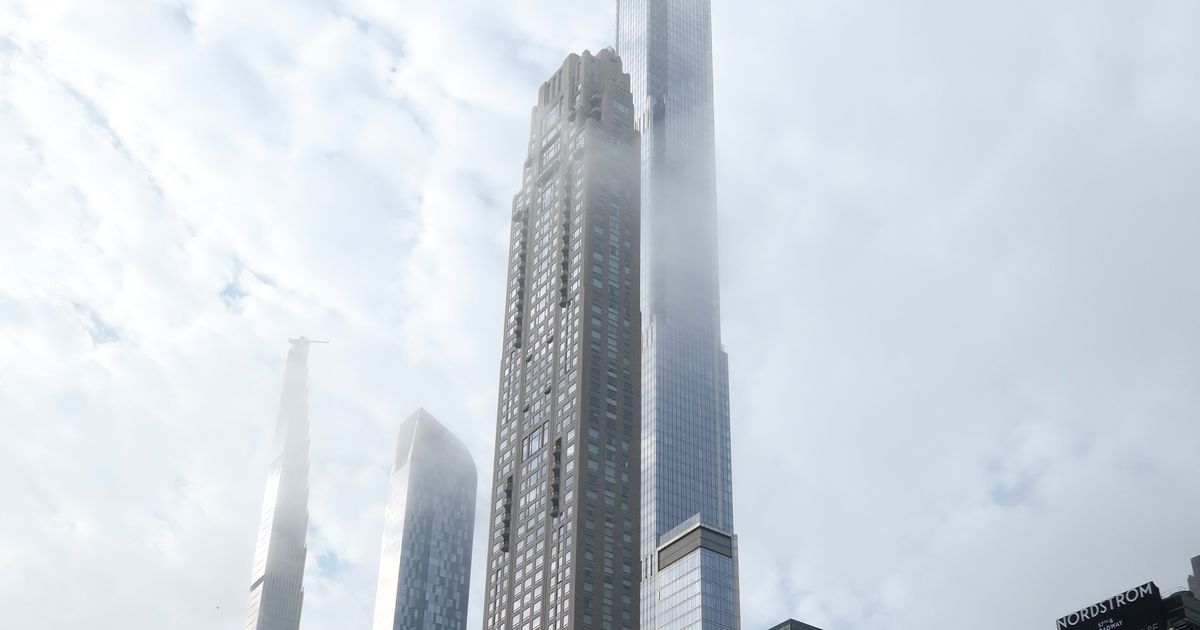

Photo: Gary Hershorn/Getty Images
After bedbugs, roaches, and rat infestations, murky tap water is among the most off-putting experiences in New York City apartment living. Ordinary folk tolerate it in their aged walkups; you’d think the residents of an eight-figure Billionaires’ Row condo would be able to avoid it. Yet, according to a Manhattan Supreme Court lawsuit filed last month, that apparently sums up the headache Mexican hardware titan Daniel Jusidman’s family has been dealing with in their pied-à-terre at 220 Central Park South, arguably the most desirable New York building of our era.
For seven years, according to the complaint, which was first reported by the New York Post, hot water from the faucets in the 4,300-square-foot apartment’s kitchen and bathrooms has been “milky” and “white,” and a chalky residue has been coating the fixtures. That’s allegedly been so since when an LLC linked to Daniel’s son Arie Jusidman purchased the 14th-floor property in the ultraluxury tower’s 18-story “villa” section in 2019 for $46.5 million; according to the suit, new filters in the bathroom and kitchen haven’t helped. “After approximately seven years of experiencing Water Issues and hearing nothing but excuses and promises from the Board,” says the complaint, “Owner was left with no other choice but to bring suit.”
Among those excuses: The building is apparently pretty empty, particularly in the upper floors of the villa annex where Jusidman’s pied-à-terre is located — right below Sting’s $66 million penthouse. “The top zone of the Villa, in particular, has extremely low occupancy, the lowest we have seen in both the Villa and the Tower,” the building’s manager wrote in an August 2024 email (included in the suit) to Jusidman. “We believe that the lack of usage after the building was completed has [led] to a [build] up of deposits in the system.” It’s often noted that many Billionaires’ Row apartments are bought as cash-stashing assets for the oligarchs of the world, and there is a tidy irony in the implication that their collective absence may be causing trouble for one of the few residents who actually does, at least on occasion, spend time here.
In summer 2024, the board brought in a water-testing consultant whose analysis found elevated levels of zinc, aluminum, iron, and copper. This, the consultant suggested, likely stemmed from “a lack of use” and recommended continued flushing of the pipes. The explanation flummoxed Jusidman, who in one email called the apartment’s predicament “embarrassing.” “We also have 4 more homes/apartments that we use occasionally and we do no flushing at all and water is always clear,” he wrote in a separate email to the building’s general manager. A second consultant, hired directly by the Jusidmans, per court records, also found elevated levels of copper, nickel, and zinc earlier this year in its water samples and concluded that the issue was likely the result of “plumbing-related metal leaching.”
I called consultants who had not inspected the property, and they said the problems described in the lawsuit certainly could be linked to a lack of use. “Heat and stagnation can both accelerate corrosion and metal release,” Ibrahim Ahmed, founder of Pegasus Consulting Group, told me. “When water sits unused in a hot-water line, the potential for plumbing-related contamination increases.” The outside consultants explained that the most common reason for white, cloudy water is dissolved air, which is harmless and can be tested by filling a glass and waiting a couple of minutes to see if the cloudiness dissipates. But Dennis Kanakis, founder and lead water-testing specialist at Olympian Water Testing, said water sitting unused for long periods of time in a line can lead to other issues. “The residual chlorine disinfectant fades, metals and minerals have more time to leach or deposit, sediment can settle and release, and biofilm — bacteria — can establish,” Kanakis said, adding, “A building or a tier of a building used largely as pied-à-terre, where units sit empty for weeks at a time, fits that pattern well. Regular use and periodic flushing tend to keep these problems at bay.” As for the chalky residue, Ahmed says the noted heavy levels of zinc in the water samples, and fixtures’ white coating, could be a sign of “leaching of brass components or galvanized plumbing.” (Galvanized pipes, which are banned in new construction, are unlikely to be the culprit in a building as young as 220 Central Park West, but brass fittings are used everywhere.)
In October 2024, the building manager wrote to Arie Jusidman that the staff would conduct triannual large-scale flushings in an effort to address the apartment’s water issues, but the following July, the problems apparently continued. “Everything that you have done so far has not improved the quality of the water,” Jusidman wrote. Last month, the apartment’s owner sued the building, seeking damages and a court order to force repairs. A spokesman for the building’s homeowners’ association told me the suit was “without merit” and that the building routinely conducts tests on the water that have found it to be safe. “The unit owner built out his own space and installed the plumbing in his apartment. It was not built by the developer or the condominium,” the spokesman said. “We have not received complaints from other residents about this issue.”
